Water treatment cycle poster

I recently finished this movie theater-sized water treatment cycle poster for my employer’s booth at the “Introduce a Girl to Engineering” K-12 career expo. The poster educates young readers about the path water takes to reach our homes, schools, and businesses, and sparks conversations about engineering careers. I’m currently working at Hazen and Sawyer, an engineering firm that addresses water supply and water quality challenges.

This project scratched an itch for me by combining my interests in writing and illustration. I worked closely with Hazen engineers and recruiting specialists to refine their text and build the 24×36″ design. I drew each illustration individually before arranging the final poster layout in one massive Adobe Illustrator file. We were on a tight deadline but completed the project in time to print and frame it before the career expo.

The Water Treatment Cycle poster shows six large icons in a chronological circle, surrounding a young engineer with her arms crossed proudly in a high-vis vest and white Hazen helmet. The steps/icons are: Point of Use, Sewer System, Wastewater Treatment Plant, Water Source, Drinking Water Treatment Plant, and Drinking Water Delivery and Conveyance.
Engineers in the water industry help design, construct, operate, and maintain safe drinking water to protect the public and our environment.
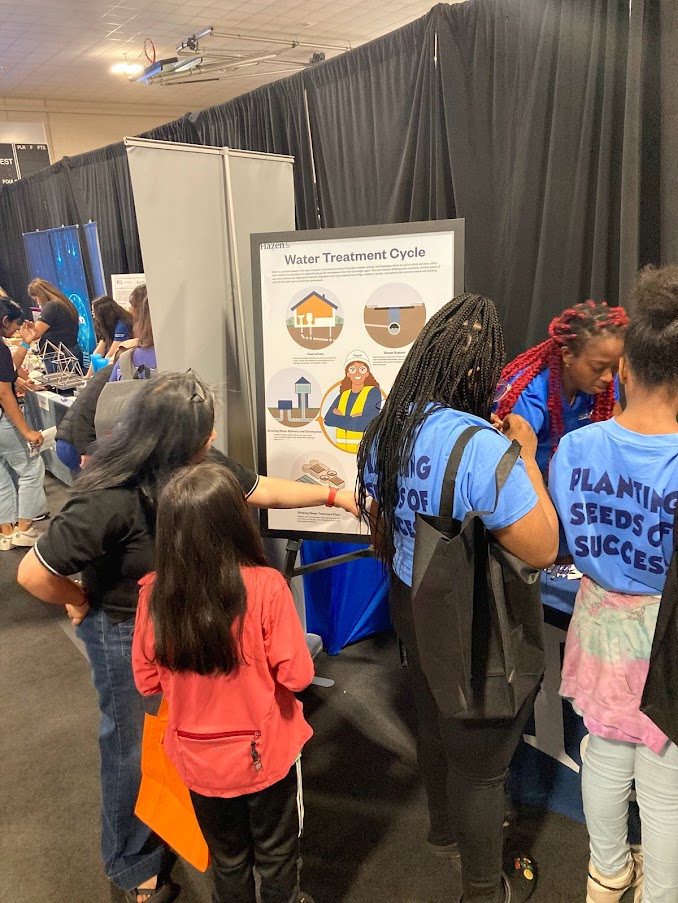
A photo of my Water Treatment Cycle poster in use at the conference. A Hazen engineer is pointing at the poster and describing it to an interested student protege, an elementary-aged girl in a pink backpack.
Planting seeds of success. Hazen engineers used the poster to introduce and describe the importance of the water treatment cycle to future colleagues from K-12 schools.
The "Introduce a Girl to Engineering" logo on a banner with multiple flowing outlines of women moving across the banner.
If you have the expertise and time to volunteer, get involved with “Introduce a Girl to Engineering!”

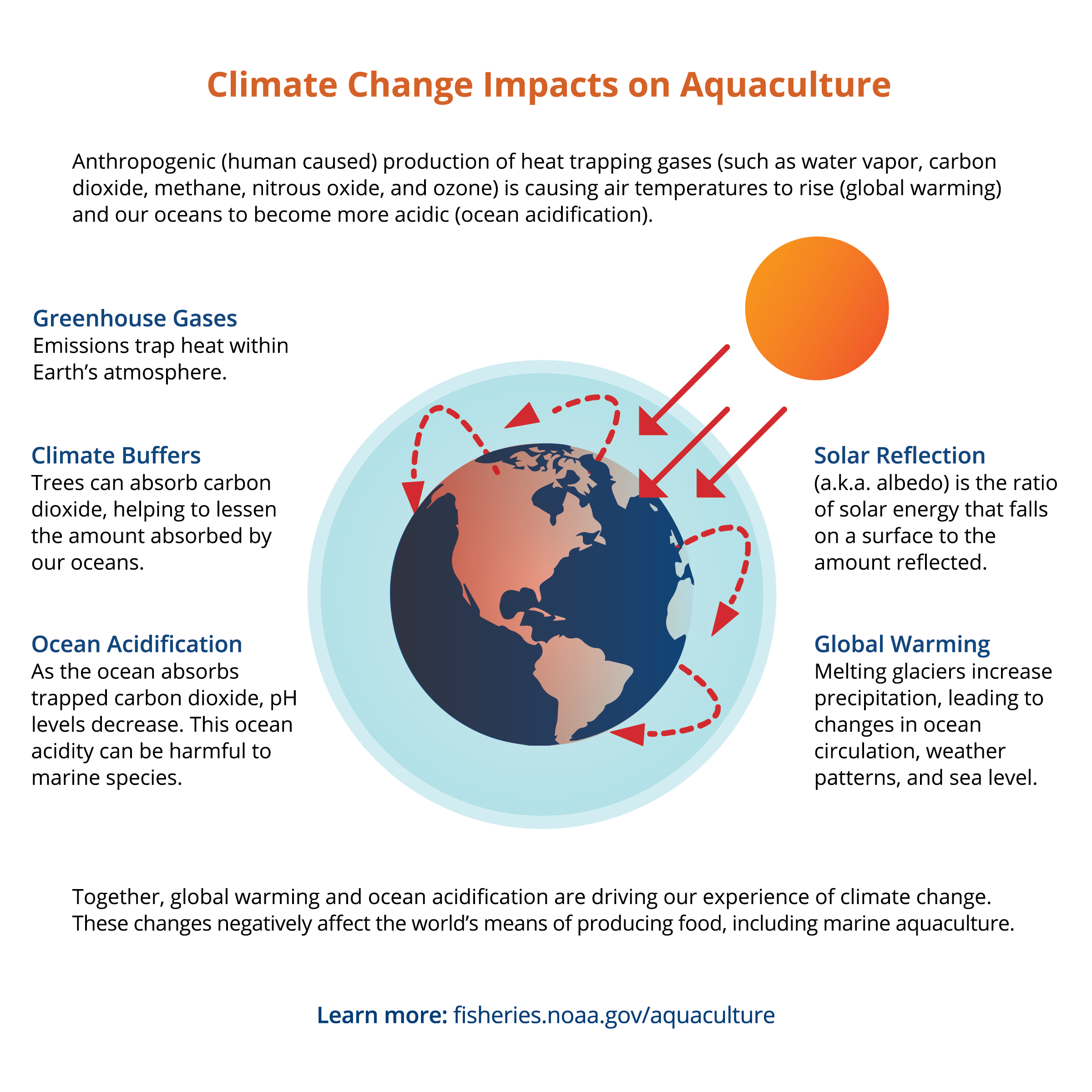
Ocean Acidification and Aquaculture

It has been a while since I blogged anything (I blame COVID). But, I swear I am going to start adding my infographics from NOAA Fisheries to the site.

Here is one that I finished recently, ‘Ocean Acidification and Aquaculture.’ It will be used in an upcoming report about the effects of climate change and ocean acidification on marine aquaculture.

“Ocean Acidification and Aquaculture,” a report infographic.

I Went Viral

agriculture-in-maryland-header

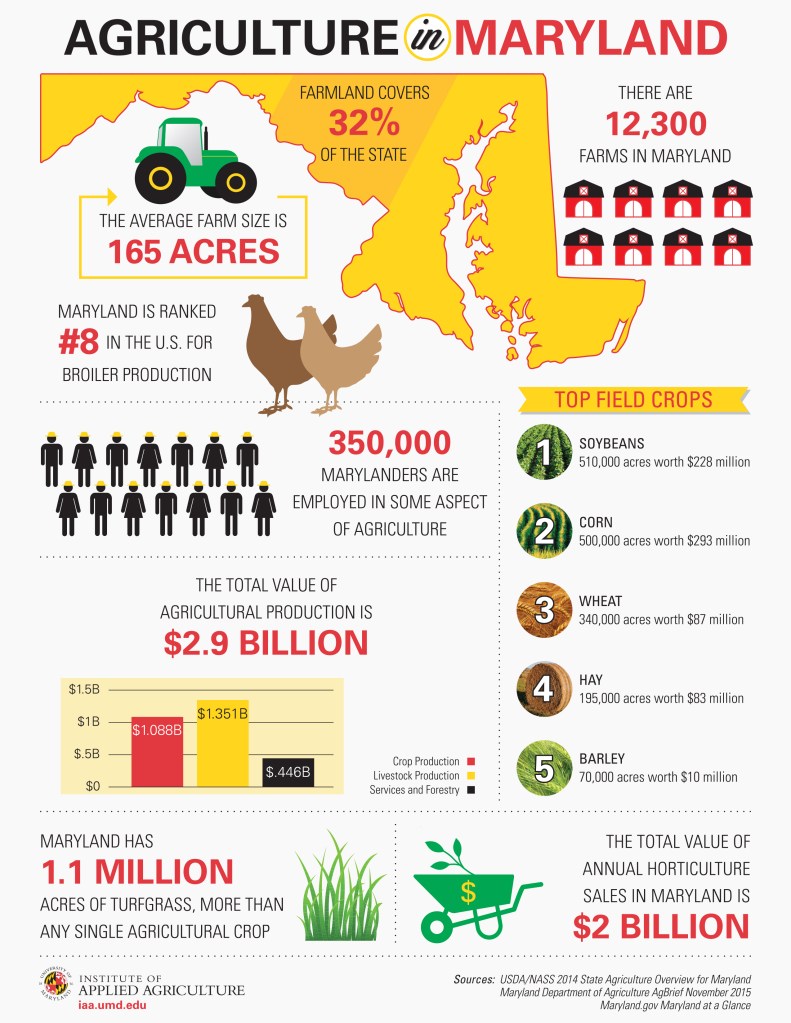
Last fall, my co-worker Larisa Cioaca presented me with some statistics about Maryland agriculture and a request to create an infographic. Larisa is the Agricultural Business Management lecturer and advisor at the Institute of Applied Agriculture (IAA), where I am the Student Services Coordinator and Graphic Designer.

The project was shelved for a little while, but I eventually put it together and posted it on the IAA Facebook page last Friday at 10:00 a.m.

As of right now (11:00 a.m. on Sunday) it has 40 likes and 84 shares. Whaaat? Why wasn’t there this much hype about my Open House post?

I credit Meredith Epstein, lecturer and advisor of the Sustainable Agriculture course of study at the IAA, with the idea of drawing male AND female farmers in the “350,000 Marylanders” block. Because: equality.

I feel so affirmed by my newfound ag peers. I look forward to creating the next infographic for the IAA, Alternative Agriculture in Maryland.

Please feel free to download the infographic from the IAA website for printing and posting in classrooms.

**Update: We are now up to 121 shares! Whaaat?

iaa-agriculture-in-maryland